
Construction Site Security: Protecting Your Edmonton Job Site from Theft
By the Triton Surveillance Team
Reviewed for technical accuracy by Chris Reilly, Co-Founder & Managing Director, Triton Surveillance Inc.
Construction site theft is one of the most persistent and costly problems facing builders, general contractors, and developers in Edmonton. Job sites are inherently vulnerable. Large open areas, valuable materials and equipment stored outdoors, and limited supervision after hours create ideal conditions for theft. And the losses are not just financial. A stolen load of copper pipe or a missing piece of heavy equipment can delay a project by days or weeks, trigger insurance claims that raise future premiums, and create safety hazards when incomplete work is left exposed.
This construction site security cameras guide covers the scope of the problem in Alberta, the temporary construction surveillance and job site camera systems available, and practical strategies for protecting your Edmonton job site from beginning to completion.
The Scale of Construction Site Theft in Alberta
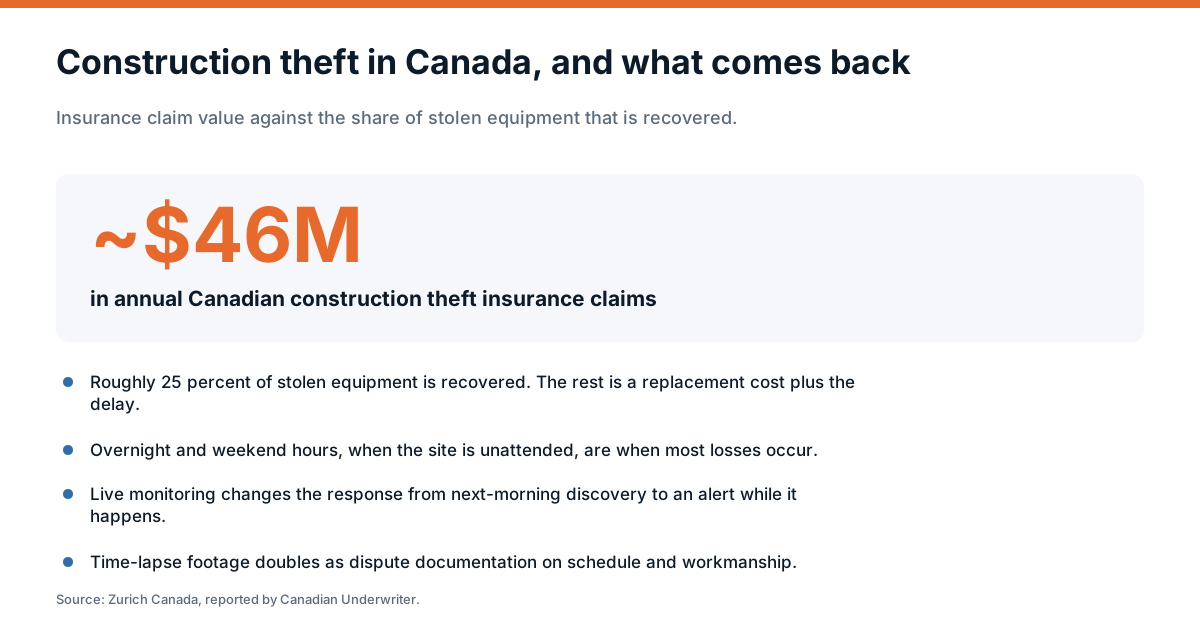
Construction theft costs Canadian builders an estimated $46 million in insurance claims every year (Zurich Canada), and only about 1 in 4 stolen pieces of equipment is ever recovered. Alberta represents a disproportionate share due to the province's concentrated construction and energy infrastructure activity. The most commonly stolen items from Edmonton construction sites include copper wire and pipe (targeted for scrap metal resale); power and hand tools (easily carried off and resold); heavy equipment such as skid steers, generators, and compactors; building materials including lumber, drywall, and roofing supplies staged for next-day installation; and fuel from on-site equipment tanks. Many thefts go unreported, particularly smaller tool losses that fall below insurance deductibles. The actual scale of the problem is likely larger than reported statistics suggest.
Why Construction Sites Are Targeted
Several factors make construction sites attractive targets:
- Predictable schedules.Thieves know that sites are typically unoccupied between 6 PM and 6 AM, on weekends, and on holidays
- Limited perimeter security.Chain-link fencing provides minimal deterrent to motivated thieves
- High-value, portable items.Tools and materials are designed to be moved easily, which also makes them easy to steal
- Temporary nature.Unlike a permanent facility with established security, construction sites change daily, making consistent security harder to maintain
- Remote or isolated locations.Subdivision developments and industrial zone projects often lack nearby witnesses or foot traffic
Temporary Construction Surveillance: Job Site Camera Systems
Traditional hardwired security cameras require permanent infrastructure (conduit, network cabling, power circuits) that does not exist on a construction site. Temporary camera systems are purpose-built for the job site environment.
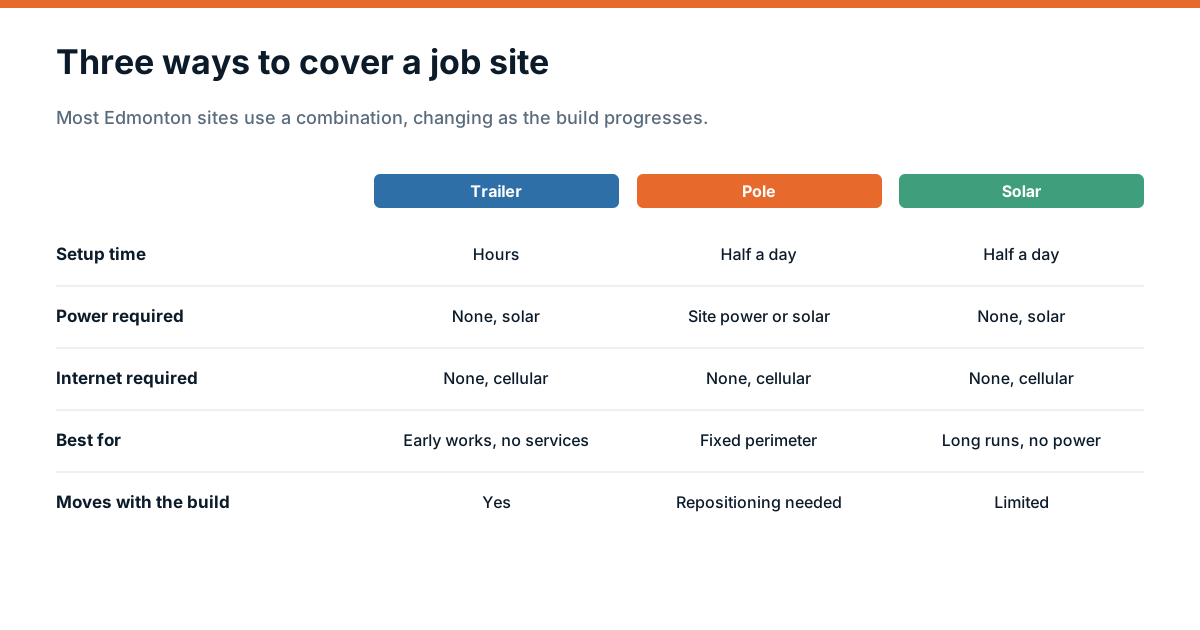
Trailer-Mounted Camera Systems
Self-contained mobile surveillance trailers are the most common solution for construction site security:
- Self-powered with solar panels and battery banks, or diesel/propane generators
- Telescoping masts that raise cameras well above ground level for maximum coverage
- Cellular connectivity for remote viewing and alert transmission without site internet
- Integrated lighting and audible deterrents (speakers for live voice-down warnings)
- Towable.can be repositioned as the site evolves or moved between projects
A single surveillance trailer with two to four cameras can effectively monitor a significant portion of a typical construction site. Larger sites may require multiple trailers positioned at key access points and material staging areas.
Cost: Pricing varies based on camera count, monitoring level, and project duration. Contact Triton Surveillance for a custom quote on your construction site security project.
Pole-Mounted Camera Systems
For sites where a trailer is impractical (tight urban lots, for example), pole-mounted cameras offer a more compact alternative:
- Mounted on existing utility poles, light standards, or dedicated temporary poles
- Solar-powered with battery backup for off-grid operation
- Cellular data transmission
- Smaller footprint than trailer systems
Pole-mounted systems work well for smaller sites or as supplements to trailer-mounted systems on larger projects.
Cost: Pole-mounted system pricing depends on camera specifications and power configuration. Request a quote for your specific site requirements.
Solar-Powered Systems
Edmonton's northern latitude and short winter days present a challenge for solar-powered camera systems. Effective solar-powered construction cameras in Edmonton require:
- Oversized solar panels.Typically 200–400 watts to compensate for limited winter daylight
- High-capacity battery banks.Enough storage to maintain operation through 2–3 days of heavy cloud cover or snow-covered panels
- Low-power camera hardware.Cameras that draw minimal power while maintaining adequate image quality
- Automatic power management.Systems that reduce recording frequency during low-power conditions rather than shutting down entirely
Pure solar systems work well from March through October in Edmonton. For winter construction projects, a hybrid system with solar plus a small generator or grid power connection is more reliable.
Cellular Connectivity for Sites Without Internet
Construction sites rarely have internet service, especially in the early phases of a project. All temporary camera systems rely on cellular connectivity:
How It Works
Cameras transmit video data over LTE or 5G cellular networks to a cloud platform or monitoring centre. You access live and recorded video through a mobile app or web browser from anywhere.
Data Considerations
Video surveillance generates substantial data. A single camera streaming 24/7 at reasonable quality uses 50–150 GB per month. Multiply that by four cameras and you are looking at 200–600 GB monthly. Temporary construction camera systems manage this through:
- Motion-activated recording.Cameras record only when movement is detected, dramatically reducing data usage
- Adaptive compression.Lower quality continuous recording with high quality triggered by events
- On-device storage.Recording locally to SD cards or on-board NVRs with only alerts and clips transmitted over cellular
- Managed data plans.Providers like Triton include cellular data in the service package so you do not need to manage carrier relationships
Coverage Gaps
Before deploying cellular cameras, verify LTE coverage at your specific site location. Urban Edmonton sites generally have strong coverage, but sites on the outskirts, in river valley areas, or in newly developed zones may have weaker signals. Signal boosters can address marginal coverage situations.
Time-Lapse Documentation Benefits
Construction cameras serve purposes beyond security. Time-lapse documentation has become a valuable project management tool:
Progress Reporting
Automated daily or hourly photos from fixed camera positions create a visual record of construction progress. This is useful for:
- Client and stakeholder updates.Visual progress reports are more compelling than written summaries
- Remote project oversight.Owners and project managers can observe site activity without being physically present
- Milestone documentation.Recording the completion of key project phases
Dispute Resolution
Construction disputes over work quality, sequence, or completion are common. Camera footage provides objective evidence:
- Work sequence documentation.Proving that work was completed in the contractually specified order
- Weather delay verification.Documenting conditions that justify schedule extensions
- Subcontractor activity.Verifying when specific trades were on-site and what work was performed
- Damage attribution.Determining which trade or activity caused damage to completed work
Marketing Material
Time-lapse videos of a project from groundbreaking to completion make compelling marketing content for construction companies. A 60-second time-lapse of a building rising from a cleared lot is visually engaging and demonstrates capability.
Insurance Implications
Construction site security cameras interact with insurance in two important ways:
Premium Reductions
Many commercial insurance providers offer premium discounts for construction sites with monitored security camera systems. The discount varies by insurer and policy type, but reductions on builder's risk or contractor's equipment policies are common. Over the course of a large project, these savings can offset a significant portion of the camera system's cost.
To qualify for discounts, your camera system typically must include:
- Professional monitoring.Not just self-monitored
- Continuous recording.Not just motion-triggered snapshots
- Adequate coverage.All material staging areas and equipment storage zones
- Documented deployment.Written records showing when cameras were installed and their coverage areas
Claims Documentation
When theft does occur, camera footage dramatically improves the claims process:
- Proof of loss.Video evidence of items being removed from the site
- Time and date documentation.Establishing exactly when the theft occurred
- Suspect identification.Footage that can be provided to law enforcement
- Value verification.Showing what equipment and materials were on-site before the theft
Without camera footage, insurance claims rely on inventory records and circumstantial evidence, which can result in delayed or reduced settlements.
Integration with Site Access Control
For larger construction projects, combining cameras with access control creates a comprehensive security approach:
Controlled Access Points
Limiting site access to a single gate with a controlled entry system forces all traffic through a monitored point. Options include:
- Card/fob readers for regular site workers and subcontractors
- PIN code access for temporary visitors
- License plate recognition to log vehicle entry and exit
- Guard-controlled gates for high-security or high-traffic projects
Worker Verification
Access control systems verify that everyone on-site is authorized to be there. This supports:
- Safety compliance.Ensuring only properly credentialed workers access hazardous areas
- Liability management.Documenting who was on-site at any given time
- Theft deterrence.Unauthorized individuals cannot casually walk onto the site
- Subcontractor management.Verifying that the correct trades are on-site on the correct days
Deterrent Strategies Beyond Cameras
Cameras are a critical component of construction site security, but they work best as part of a layered approach:
Visible Deterrents
- Prominent camera placement.Cameras visible from access points and perimeter roads deter opportunistic theft
- Warning signage."This site is under 24/7 video surveillance" signs at all access points and along fence lines
- Lighting.Motion-activated or timer-controlled lighting eliminates dark areas where thieves can operate unseen
- Surveillance trailer presence.The trailer itself is a visible security statement
Operational Practices
- Secure tools nightly.Lock tools in job boxes or shipping containers, not loose in the building
- Stage materials strategically.Do not stage more materials than needed for the next day's work
- Remove keys from equipment.Never leave keys in heavy equipment overnight
- Vary schedules.Occasional after-hours site visits by supervisors make the schedule less predictable
- Maintain an inventory.Photograph and record serial numbers of all tools and equipment on-site
Fencing and Barriers
- Anti-climb fencing with barbed wire or razor wire for high-value sites
- Locked gates with hardened padlocks, since standard construction fencing gates are easily breached
- Concrete barriers at vehicle access points to prevent drive-through theft of heavy equipment
When to Deploy and How Quickly We Can Set Up
The ideal time to deploy construction site cameras is before materials and equipment arrive on-site. In practice, this means:
Deployment Timeline
- Site preparation phase.Install cameras when fencing goes up, before any materials are staged
- Foundation through framing.Peak theft risk period when copper, equipment, and tools are most exposed
- Interior finishing.Continued risk from tool theft and material losses
- Project completion.Remove cameras when the permanent security system is operational or the site is secured
Triton's Setup Speed
We understand that construction schedules do not wait. Triton offers rapid deployment construction security for Edmonton job sites:
- Trailer-mounted systems commonly deployed within 24–48 hours of project confirmation, depending on equipment availability, site access, and connectivity
- Pole-mounted cameras installed within 1–3 business days
- Remote monitoring typically activated the same day as camera deployment
- Project-sized systems scoped to your specific timeline and footprint
Our systems arrive on-site pre-configured and tested. We handle cellular connectivity, monitoring centre setup, and mobile app access so your team can focus on building.
The ROI of Construction Site Security
Consider the cost of not securing your site:
- Average construction theft claim: $10,000–$50,000+
- Project delays from stolen materials: 2–10 days (at $5,000–$20,000+ per day in delay costs)
- Insurance premium increases after claims
- Time spent on police reports, insurance claims, and replacement procurement
A temporary camera system represents a modest monthly investment compared to these potential losses. For most projects, the system pays for itself if it prevents even one significant theft event.
Protect Your Next Edmonton Construction Project
Construction site theft is not a hypothetical risk. It happens on Edmonton job sites every week. The builders who avoid losses are the ones who deploy construction site security cameras proactively, not the ones who assume their site will be the exception.
Planning a construction project? Contact Triton Surveillance for a temporary construction surveillance assessment in Edmonton. We will evaluate your site, recommend the right job site camera system for your project scope, and have your system operational within days.