
Best Security Cameras for Edmonton's Extreme Winter Climate
By the Triton Surveillance Team
Reviewed for technical accuracy by Chris Reilly, Co-Founder & Managing Director, Triton Surveillance Inc.
Edmonton's winters are brutal on security equipment. When temperatures plunge to -30°C and beyond, the cameras protecting your business face conditions that most consumer-grade hardware simply cannot survive. Every winter, we get calls from business owners whose camera systems went dark during a cold snap, often at the exact moment they needed footage most.
This guide covers what actually happens to security cameras in Edmonton winter conditions, which specifications matter for cold weather surveillance cameras, and how to choose cold-rated security cameras for Alberta's harshest months.
Why Consumer Cameras Fail in Edmonton Winters
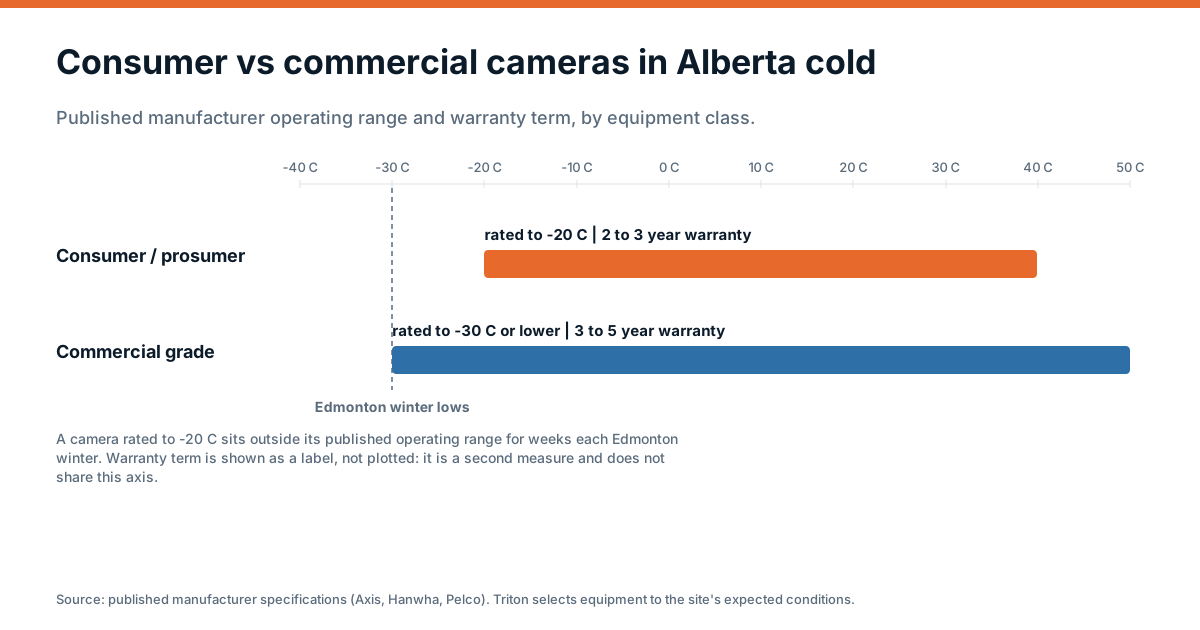
Consumer security camera lines are typically rated to only −20°C and ship with 2–3 year warranties. Commercial cameras from Axis, Hanwha, and Pelco are rated to −30°C or colder and carry 3–5 year warranties. That matters in Edmonton, where temperatures regularly drop below −25°C. With wind chill, effective temperatures at exposed mounting points can reach −40°C or colder. When consumer cameras encounter these temperatures, four critical failures occur almost simultaneously. First, lithium-ion batteries lose a substantial share of their usable capacity in deep cold and may refuse to charge or hold power at −30°C. Second, rapid temperature shifts cause internal condensation that fogs lenses and can freeze into ice crystals on sensor elements. Third, standard ABS plastic housings become brittle below −25°C and crack at mounting points or cable entry points. Fourth, infrared LEDs (essential for night vision) lose significant output at extreme cold temperatures.
These are not edge cases. In Edmonton, temperatures below -25°C occur multiple times each winter, sometimes for weeks at a stretch. A camera system that fails in cold weather is not a security system. It is a false sense of security.
Battery-Powered Cameras Are Not an Option
Wireless, battery-powered cameras have become popular for residential use. They are fundamentally unsuitable for Edmonton commercial applications. Beyond the cold-weather battery drain, wireless signals degrade in heavy snowfall, and solar charging panels produce minimal power during Edmonton's short winter daylight hours. For any business application, hardwired power and data connections are non-negotiable in our climate.
Understanding IP Ratings for Cold-Weather Cameras
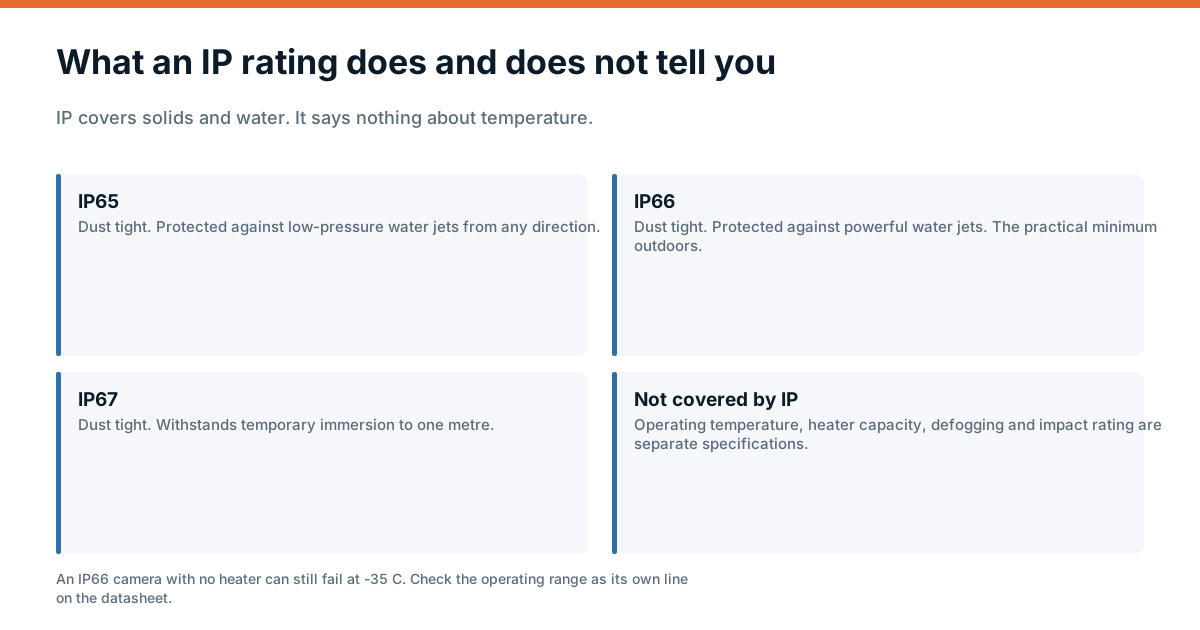
IP (Ingress Protection) ratings tell you how well a camera's housing resists dust and water. For Edmonton winters, the second digit is critical:
- IP65.Protected against low-pressure water jets from any direction. Adequate for sheltered mounting locations under soffits or overhangs.
- IP66.Protected against powerful water jets. Suitable for most exposed mounting positions where cameras face direct precipitation.
- IP67.Can withstand temporary submersion in water up to 1 metre. Recommended for Edmonton where ice dams and heavy meltwater are common in spring.
- IP68.Continuous submersion protection. Typically overkill for above-ground installations but provides the highest level of environmental sealing.
For Edmonton commercial installations, IP67 is our minimum recommendation for any outdoor camera. The additional sealing protects not just against water intrusion but also against the fine ice crystals and wind-driven snow that find their way into lesser-rated enclosures.
IP Ratings Do Not Cover Temperature
A critical point that many buyers miss: IP ratings measure water and dust protection only. They say nothing about operating temperature range. A camera can be IP68-rated and still fail at -25°C if its electronics are not designed for cold operation. Always check the manufacturer's stated operating temperature range independently of the IP rating.
Heated Housings and Internal Defoggers
Commercial-grade outdoor cameras designed for northern climates include two features that consumer cameras lack:
Heated Enclosures
Professional camera housings include thermostatically controlled heating elements that activate when internal temperatures drop below a set threshold (typically around 0°C). These heaters draw 15–30 watts and maintain the camera's internal environment at a stable temperature regardless of outdoor conditions. The heating element protects sensitive electronics, keeps the image sensor at optimal operating temperature, and prevents internal condensation.
For Edmonton installations, we specify heaters rated for continuous operation at the low end of the expected temperature range. Cheaper heated housings rated only to -20°C will run their heaters continuously in a cold snap, potentially burning them out when they are needed most.
Anti-Fog and Anti-Ice Window Systems
Even with internal heating, the camera's viewing window can frost over on the exterior. Professional housings address this with:
- Heated window rings.A low-wattage heating element around the viewing window perimeter that prevents ice buildup
- Hydrophobic coatings.Applied to the outer glass surface to shed water droplets before they freeze
- Wiper systems.Motorized wipers on PTZ (pan-tilt-zoom) cameras that can clear ice and snow from the lens window
These features may seem like extras, but they are the difference between a camera that captures clear footage at -35°C and one that records nothing but a frosted white circle.
Camera Types That Handle Edmonton Weather
Not all commercial camera lines perform equally in extreme cold. Based on our years of installing and servicing systems through Edmonton winters, here are the categories that perform reliably:
Commercial-Grade Fixed Cameras
Brands like Pelco, Honeywell, Axis, and Hanwha manufacture fixed cameras with genuine cold-weather specifications. Key features to look for:
- An operating range that covers the site's expected conditions.not -20°C or -30°C
- Integrated heater and defogger.factory-installed, not aftermarket
- Metal housings.cast aluminum or stainless steel, not plastic
- Redundant cable seals.double gaskets at cable entry points
These cameras carry a premium over their standard-temperature equivalents, but the premium is justified by reliability. Replacing a failed camera in February (including lift rental and technician time in dangerous cold) costs far more than specifying the right camera initially.
PTZ Cameras for Large Properties
Pan-tilt-zoom cameras face additional cold-weather challenges because their mechanical components must move smoothly in extreme cold. Low-quality PTZ cameras use grease in their gear mechanisms that stiffens below -20°C, causing jerky movement or complete lock-up.
Commercial cold-rated PTZ cameras use synthetic lubricants rated for arctic conditions and include heating elements for the motor assemblies. These are a premium investment compared to standard PTZ units, but the cold-weather engineering is essential for reliable operation through an Edmonton winter. Contact Triton Surveillance for current pricing on commercial-grade cold-rated PTZ cameras suited to your site.
Thermal Imaging Cameras
For the most extreme conditions, or for applications where identification is less important than detection, thermal cameras offer a compelling advantage: they do not depend on visible light or IR illumination. Thermal cameras detect heat signatures, meaning they work in complete darkness, through light snow, and in conditions where conventional cameras produce unusable images.
Thermal cameras are increasingly used for:
- Perimeter security on large commercial or industrial properties
- After-hours intrusion detection at warehouses and storage yards
- Monitoring critical infrastructure like electrical substations
While thermal cameras do not provide the detail needed for facial identification, they are exceptionally reliable at detecting human-sized heat signatures at long range, even in whiteout conditions.
Installation Considerations for Extreme Cold
Choosing the right camera is only half the equation. How and where cameras are installed dramatically affects cold-weather performance.
Cable and Conduit Protection
Ethernet cables (Cat6/Cat6a) used for IP cameras become stiff and brittle in extreme cold. During installation, cables must be run through conduit to protect them from wind stress, ice loading, and UV degradation. We use outdoor-rated, gel-filled cables for all exposed runs and ensure adequate service loops at each camera location so thermal contraction does not pull cables from connectors.
Mounting Points and Thermal Bridging
Metal mounting brackets conduct cold directly into camera housings, creating thermal bridges that increase heater workload. We use insulating mounting pads between brackets and surfaces, and we select mounting locations that minimize wind exposure where possible, such as inside corners of buildings rather than exposed corners.
Power Considerations
Camera heaters increase power draw significantly. A camera that draws 12 watts in summer may draw 40+ watts in winter with its heater running. PoE (Power over Ethernet) switches and injectors must be sized for worst-case winter draw, not summer specifications. We calculate power budgets for deep-cold operation to ensure switches are not overloaded during cold snaps.
Infrared Illuminators
Edmonton's winter daylight is limited, with as little as 7–8 hours in December. Cameras depend on IR illumination for the remaining 16+ hours. We supplement built-in camera IR with dedicated external IR illuminators mounted in heated housings. External illuminators provide more consistent and powerful illumination than built-in LEDs, and they can be aimed independently of the camera's field of view.
Maintenance for Winter Performance
Even properly specified cameras benefit from seasonal maintenance:
- Fall inspection (October–November): clean all camera windows, verify heater operation, check cable connections, clear debris from drain holes in housings
- Mid-winter check (January): verify cameras are producing clear images, check for ice accumulation, confirm heater function via power consumption monitoring
- Spring inspection (March–April): check for damage from ice falling from rooflines, clear meltwater drainage paths, inspect for housing cracks from thermal cycling
Triton offers seasonal maintenance packages that cover these inspections and ensure your system is prepared for each phase of Edmonton's climate cycle.
Triton's Climate-Rated Approach
At Triton Surveillance, every outdoor camera system we design for Edmonton starts with the assumption that it will face -40°C conditions. We do not sell consumer-grade equipment for commercial applications, and we do not cut corners on environmental ratings to hit a lower price point.
Our approach includes:
- Specifying cameras whose published operating range covers the site conditions for all outdoor positions
- Using heated housings with integrated defoggers as standard, not optional upgrades
- Designing power systems for worst-case winter draw so heaters have the power they need
- Selecting mounting locations that balance security coverage with environmental protection
- Providing winter-specific maintenance to catch issues before they cause camera failures
If your current camera system struggles in cold weather, or if you are planning a new installation and want equipment that works year-round, we can help. Our commercial surveillance solutions are built for Edmonton's reality, not a milder climate's marketing brochure.
The Bottom Line on Cold Weather Surveillance Cameras
Edmonton's climate demands more from security cameras than most manufacturers' base specifications deliver. The cameras hanging on the shelf at a consumer electronics store are not designed for -35°C, no matter what the box says. Commercial-grade, cold-rated equipment with heated housings, proper IP67+ sealing, and professional installation is the only reliable approach for businesses that depend on continuous surveillance.
Investing in climate-appropriate cameras costs more upfront but eliminates the recurring costs of failures, replacements, and the liability gaps that occur when cameras go dark in the worst weather. For Edmonton businesses, that is not a luxury. It is a necessity.
Need cold-rated security cameras for your Alberta business? Request a free site assessment from Triton Surveillance and we will evaluate your property's specific exposure conditions and recommend cold weather surveillance cameras that perform all year.